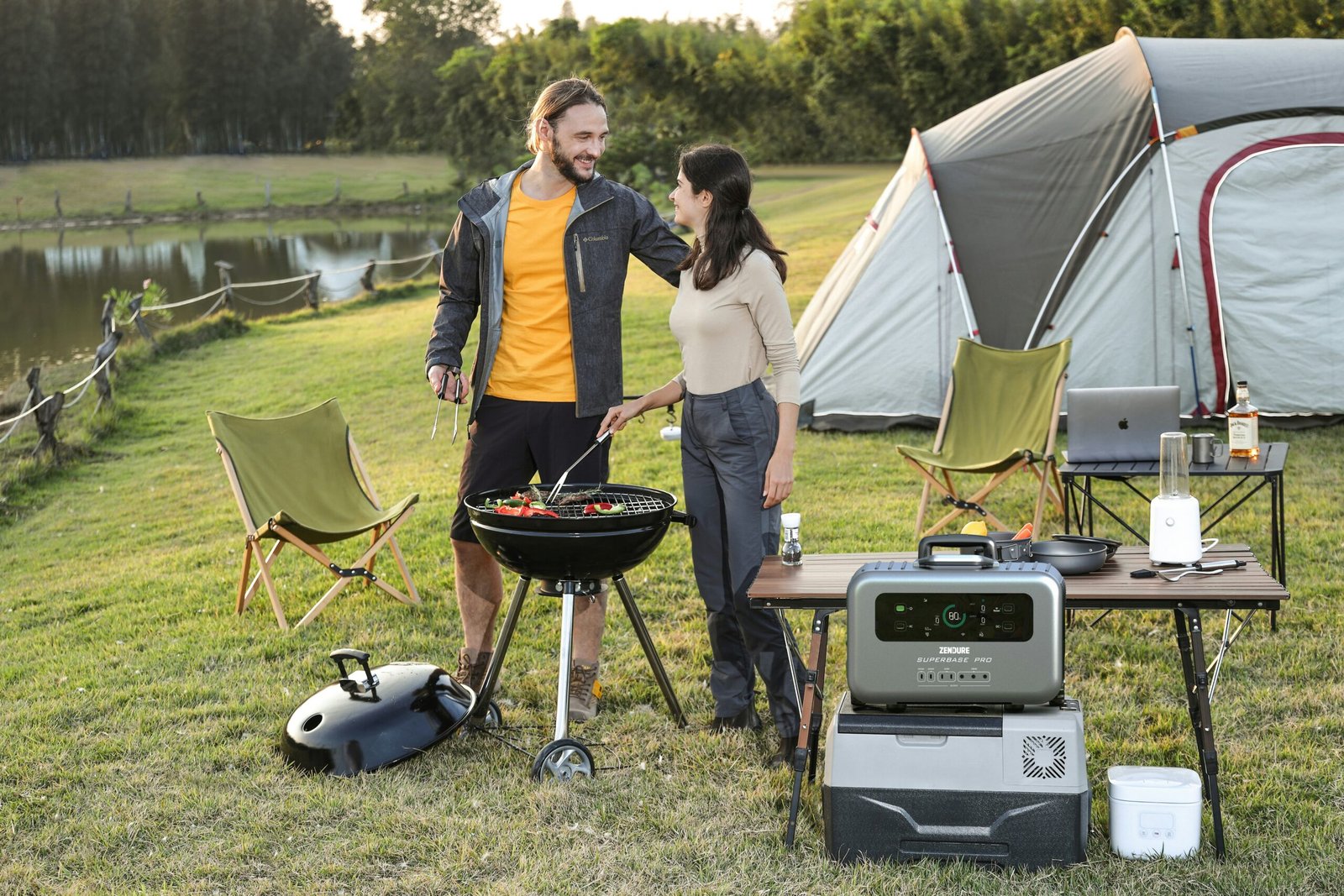
A portable power station turns your campsite into a comfortable base camp. Charge your phone, run a mini fridge, power a CPAP machine, light your camp, inflate an air mattress, and brew morning coffee — all without running your car engine or finding a powered site. After testing six popular units across multiple camping trips, here are the best options for car campers in 2026.
Our top picks
Best overall: EcoFlow RIVER 2 Pro — 768Wh capacity, fast charging (0 to 100% in 70 minutes from a wall outlet), runs small appliances, compact enough for a car trunk. Around $449.
Best value: Jackery Explorer 300 Plus — 288Wh in a 7.7-pound package. Charges phones 20+ times, runs LED lights and fans for days. Perfect for weekend warriors who don’t need to power heavy appliances. Around $249.
Best premium: Goal Zero Yeti 500X — 505Wh, built-in MPPT solar controller for efficient solar panel charging, tank-like build quality that survives rough handling. The brand trusted by search and rescue teams. Around $449.
Best budget: Bluetti EB3A — 268Wh with a 600W inverter in a compact, affordable package. Fast charging via USB-C, built-in light, and a clear display showing input and output wattage. Around $199.
What we tested
Each unit was tested across three camping scenarios: a weekend car camping trip (two nights, charging phones, running LED lights, powering a portable fan), a week-long road trip (daily phone charging, laptop charging, running a 12V cooler), and a single-night test running a mini electric kettle to boil water for coffee. We measured actual usable capacity versus rated capacity, charging speed from both wall outlets and solar panels, and overall durability after being bounced around in vehicle trunks.
Detailed reviews
1. EcoFlow RIVER 2 Pro — best overall ($449)
Capacity: 768Wh | Weight: 17.2 lbs | Output: 800W (1600W surge)
The RIVER 2 Pro’s standout feature is its X-Boost technology, which allows it to power appliances up to 1,600W — enough for a small electric kettle, a hair dryer on low, or a small blender. The 70-minute wall charge time is the fastest in our test and means you can fully recharge during a lunch stop. It ran our 12V cooler for 18 hours before hitting 20% — impressive for a unit this size. The app provides remote monitoring and firmware updates. Build quality feels premium without being heavy.
2. Jackery Explorer 300 Plus — best value ($249)
Capacity: 288Wh | Weight: 7.7 lbs | Output: 300W
Jackery’s compact unit is the most portable in our test — light enough to carry with one hand and small enough to fit in a daypack. It charged our phones 22 times before depleting, powered LED strip lights for three full camping nights, and ran a USB-powered fan for 14 hours straight. The 300W output means it won’t run high-draw appliances, but for phone charging, camera batteries, lights, and small electronics, it’s all you need. LFP battery chemistry means it retains 80% capacity after 3,000 cycles — this unit will last years.
3. Goal Zero Yeti 500X — best premium ($449)
Capacity: 505Wh | Weight: 12.9 lbs | Output: 300W (1200W surge)
Goal Zero has the strongest reputation in the portable power space, and the Yeti 500X shows why. The build quality is a step above competitors — it feels like equipment, not a gadget. The integrated MPPT solar charge controller means it pairs more efficiently with solar panels than units using PWM controllers, extracting roughly 30% more energy from the same panel in partial shade conditions. The chainable design lets you connect two units for double the capacity. If you plan to use solar panels regularly, the Yeti’s charging efficiency justifies the premium.
4. Bluetti EB3A — best budget ($199)
Capacity: 268Wh | Weight: 10.1 lbs | Output: 600W (1200W surge)
The EB3A punches above its price class with a 600W pure sine wave inverter — enough to run small appliances that the similarly-priced Jackery 300 Plus can’t handle. The 430W fast input charging via AC means a full charge in about 45 minutes. A built-in LED lamp on the side is genuinely useful for campsite lighting. The display shows real-time input and output wattage, which helps you understand exactly how much power each device is drawing. At $199, it’s hard to find a better entry point into portable power.
How to choose the right size
Weekend car camping (2 nights): 200–300Wh is sufficient. You’ll charge phones, run lights, and power small electronics without worry. The Jackery 300 Plus or Bluetti EB3A are ideal.
Extended road trips (5+ days): 500–800Wh gives you headroom for daily phone and laptop charging, running a 12V cooler, and occasional small appliance use. The EcoFlow RIVER 2 Pro or Goal Zero Yeti 500X handle this well.
Off-grid living or heavy use: 1,000Wh+ units exist but are heavy and expensive. For most car campers, a mid-range unit paired with a solar panel is more practical than carrying a massive battery.
Solar pairing tip: A 100W portable solar panel ($150–$250) can fully recharge a 300Wh power station in about 4–5 hours of direct sunlight. This makes your power essentially unlimited on longer trips — charge the station during the day while you’re hiking or sightseeing, then use the stored power at night. Most units listed above have dedicated solar input ports. EcoFlow and Jackery sell matched panels designed for their units.
Leave a Reply