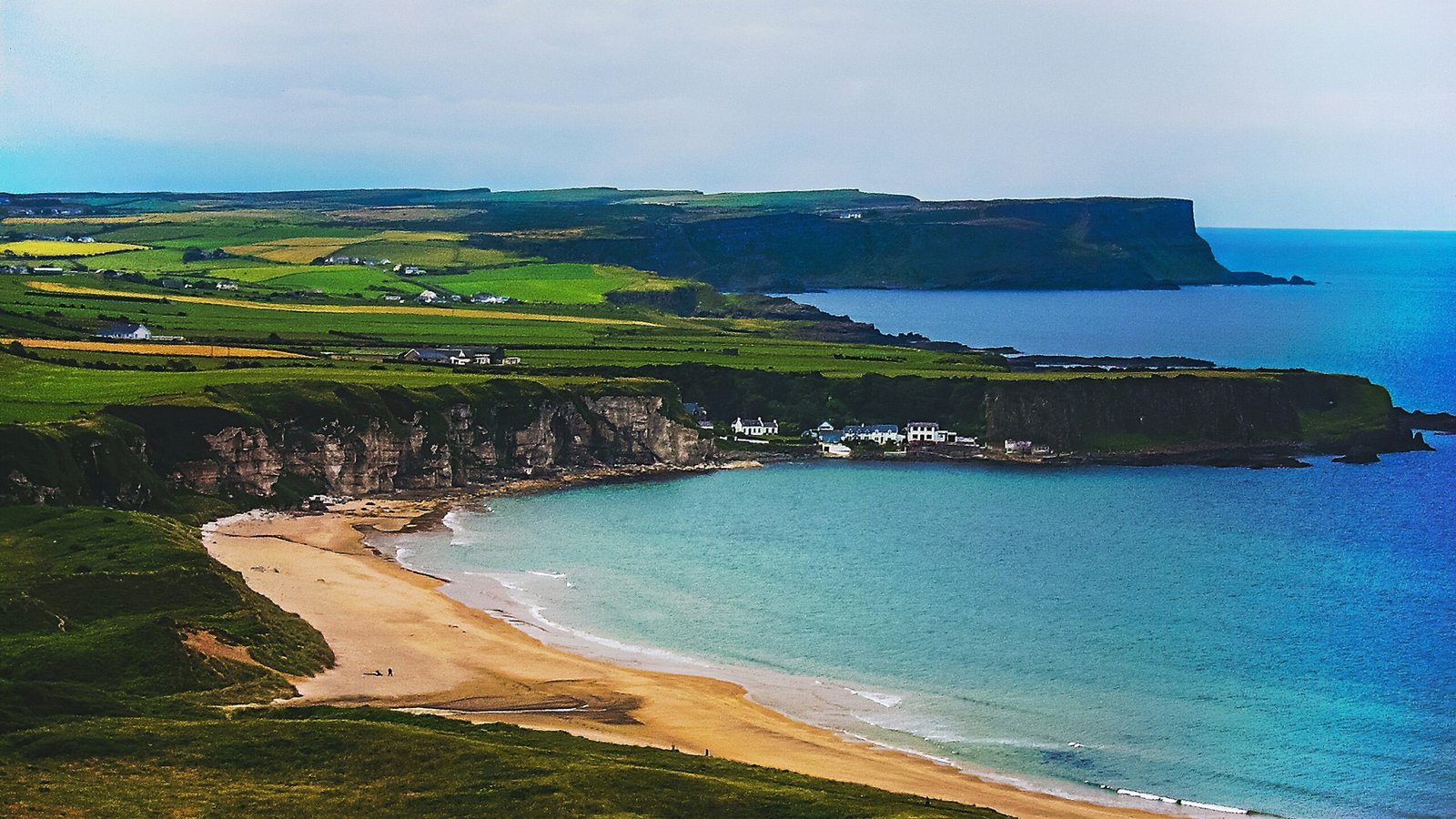
Stretching along Northern Ireland’s dramatic Atlantic coastline, the Causeway Coastal Route delivers one of the world’s most spectacular road trip experiences. This 120-mile journey from Belfast to Derry~Londonderry weaves together ancient castles, whiskey distilleries, legendary golf courses, and geological wonders that have captivated travelers for centuries. Whether you’re chasing Game of Thrones filming locations, sampling world-class Irish whiskey, or simply soaking in some of the most breathtaking coastal scenery on the planet, this route promises memories that will last a lifetime.
Quick Facts
120 miles (193 km)
3-5 days
May-September
£60-150 per person
1,200 feet at Torr Head
Giant’s Causeway, Carrick-a-Rede, Old Bushmills
Route Overview
The Causeway Coastal Route officially begins in Belfast but truly comes alive as you leave the urban sprawl behind and embrace the wild Atlantic coastline. This designated tourist route follows the A2 coastal road for most of its journey, occasionally diverting inland before returning to hug the shoreline with renewed vigor.
What sets this route apart from other coastal drives worldwide is its incredible diversity. Within a few hours, you’ll transition from bustling market towns to isolated headlands where the only sounds are crashing waves and seabirds. The route encompasses two Areas of Outstanding Natural Beauty and includes Northern Ireland’s only UNESCO World Heritage Site.
The road itself varies dramatically throughout the journey. You’ll encounter everything from smooth dual carriageways to narrow single-track lanes that require careful navigation. Most of the route offers excellent road conditions, though some sections—particularly around the Glens of Antrim—feature steep gradients and sharp curves that demand respectful driving.
Insider Tip
Download the official Causeway Coastal Route app before departing. It includes GPS-guided audio commentary that activates automatically as you drive, providing fascinating historical context and pointing out easily missed viewpoints. The app works offline, essential given the patchy mobile coverage in remote coastal areas.
Section-by-Section Breakdown
Belfast to Carrickfergus (12 miles)
Your journey begins by escaping Belfast via the A2, following signs toward Carrickfergus. This initial stretch serves as a gentle introduction, with Belfast Lough providing scenic water views to your left. Carrickfergus Castle, dating to 1177, offers an excellent first stop. The remarkably well-preserved Norman castle provides historical context for the region and boasts panoramic views across the lough. Allow 1-2 hours for exploration, with adult admission at £5.50.
Carrickfergus to Larne (12 miles)
Continuing north, the landscape gradually becomes more rugged as you approach Larne. This working ferry port might not seem glamorous, but it marks the true beginning of the coastal experience. Stock up on supplies here, as amenities become increasingly sparse further north. The Larne Museum and Arts Centre provides insight into local maritime history if weather threatens outdoor plans.
Larne to Ballygally (8 miles)
Here the route truly begins to sing. The A2 hugs the coastline closely, offering stunning views across the North Channel toward Scotland. On clear days, the Scottish islands of Arran and Kintyre Peninsula are clearly visible. Ballygally Castle, now a hotel, marks this section’s highlight. Even non-guests can explore the grounds and enjoy refreshments while admiring the 1625 structure.
Ballygally to Cushendall (25 miles)
This section introduces you to the famous Glens of Antrim, nine glacier-carved valleys that create some of Ireland’s most dramatic scenery. The road becomes more challenging here, with steep climbs, sharp descents, and numerous hairpin bends. Glenarm village deserves a stop—its forest walks and historic castle grounds provide excellent stretching opportunities.
Carnlough offers another compelling pause, with its limestone harbor and the distinctive white bridge that carries the old railway over the main road. The village’s position beneath towering cliffs creates a natural amphitheater effect that’s particularly striking in afternoon light.
Cushendall to Ballycastle (20 miles)
Known as the “Capital of the Glens,” Cushendall serves as an excellent overnight base. The village’s distinctive Curfew Tower, built in 1817, anchors the compact town center. From here, the route climbs dramatically toward Torr Head, the highest point of the entire journey at 1,200 feet.
This section includes some of the route’s most challenging driving, with gradients reaching 15% and sections of single-track road. However, the rewards are immense. Murlough Bay, accessible via a steep descent, offers perhaps the route’s most spectacular viewpoint. Fair Head’s 600-foot cliffs provide nesting sites for thousands of seabirds and panoramic views extending to Rathlin Island and the Scottish coast.
Ballycastle to Giant’s Causeway (15 miles)
Ballycastle marks your entry into the route’s most famous section. This vibrant market town offers excellent accommodation options and serves as the departure point for ferries to Rathlin Island. If time permits, the 45-minute ferry journey to explore Northern Ireland’s largest inhabited island provides a fascinating detour.
Leaving Ballycastle, the coastal road leads directly to two of the route’s headline attractions. Carrick-a-Rede Rope Bridge, suspended 98 feet above the Atlantic, has connected the mainland to Carrick Island for over 250 years. Originally built by salmon fishermen, the 65-foot-long bridge now attracts over 500,000 visitors annually. Adult tickets cost £14 and should be booked in advance during peak season.
Giant’s Causeway to Portrush (8 miles)
The Giant’s Causeway represents the route’s absolute pinnacle—literally and figuratively. This UNESCO World Heritage Site features approximately 40,000 interlocking basalt columns formed by ancient volcanic activity. The geometric precision of these hexagonal columns has inspired legends for centuries, most famously the tale of giant Fionn mac Cumhaill building a causeway to Scotland.
The modern visitor center, opened in 2012, provides excellent interpretation facilities and houses a restaurant, shop, and interactive exhibitions. Standard admission costs £13 for adults, though you can walk to the stones for free if you bypass the visitor center. The audio guide (£2) significantly enhances the experience with geological explanations and local folklore.
Portrush to Coleraine (8 miles)
Portrush brings you back to civilization with a bang. This Victorian seaside resort offers traditional amusements alongside world-class golf at Royal Portrush, which hosted The Open Championship in 2019. The town’s excellent restaurants provide welcome opportunities for memorable meals after days of scenic driving.
Coleraine to Derry~Londonderry (32 miles)
The final section includes a pilgrimage to Old Bushmills Distillery, the world’s oldest licensed whiskey distillery, operating since 1608. Guided tours (£12 for adults) include tastings and fascinating insights into the whiskey-making process. The nearby village of Bushmills offers charming accommodation options if you prefer to conclude your journey gradually.
From Bushmills, the route continues to Derry~Londonderry via Coleraine, following the River Bann inland before rejoining the coast near Magilligan Point. The final approach to Derry reveals the historic city’s impressive walls, dating to the early 17th century and among Europe’s best-preserved fortifications.
Important Safety Note
Several sections of the Causeway Coastal Route feature narrow roads with limited passing places, steep gradients, and exposure to strong coastal winds. Exercise extreme caution during winter months when ice and snow can make conditions treacherous. Always check weather forecasts before setting out, and consider postponing travel during storm warnings. Mobile phone coverage is patchy in remote areas—inform others of your planned route and timing.
Itinerary Options
The Weekend Warrior (2-3 Days)
For those with limited time, focus on the route’s absolute highlights. Start in Belfast Friday evening, reaching Ballycastle for your first overnight stop. Saturday morning, tackle Carrick-a-Rede Rope Bridge early to avoid crowds, followed by the Giant’s Causeway in the afternoon. Overnight in Portrush or Bushmills. Sunday, tour Old Bushmills Distillery before the drive to Derry~Londonderry, allowing time to walk the historic city walls before departure.
This compressed itinerary covers approximately 80% of the route’s major attractions while maintaining a reasonable pace. Budget extra time for photography stops and meal breaks.
The Classic Tour (4-5 Days)
The optimal timeframe for most travelers allows proper appreciation of both major attractions and hidden gems. Spend your first night in Carrickfergus or Larne, giving yourself a leisurely start. Day two takes you through the Glens of Antrim to Cushendall, with time for short walks and village exploration.
Dedicate day three entirely to the Ballycastle area, including a potential day trip to Rathlin Island. Day four focuses on the Giant’s Causeway area, allowing morning and evening visits when lighting conditions are optimal. Conclude with a relaxed final day exploring Portrush, Old Bushmills, and Derry~Londonderry.
The Deep Dive (7+ Days)
Extended itineraries allow for hiking, detailed historical exploration, and complete relaxation. Consider additional activities like sea kayaking from Cushendun, birdwatching at RSPB Rathlin West Light, or golf at Royal Portrush. Longer stays also permit exploration of inland attractions like the Dark Hedges (famous from Game of Thrones) and Dunluce Castle.
Weather contingency becomes less critical with extended timeframes—you can simply wait out poor conditions rather than missing key experiences.
Budget Breakdown
| Category | Budget | Mid-Range |
|---|---|---|
| Accommodation (per night) | £25-45 (hostels, B&Bs) | £70-120 (hotels, guesthouses) |
| Meals (per day) | £15-25 | £35-50 |
| Fuel (entire route) | £30-40 | £30-40 |
| Attractions (major sites) | £40-60 | £60-80 |
| Car rental (4 days) | £120-180 | £200-300 |
| Total (4 days, per person) | £230-350 | £395-590 |
These estimates assume two people sharing accommodation and car rental costs. Single travelers should add 30-50% to accommodation budgets. Premium experiences like helicopter tours, luxury dining, or five-star hotels can easily double mid-range estimates.
Money-saving strategies include traveling during shoulder seasons (May or September), booking accommodations well in advance, and preparing picnic lunches for scenic roadside dining. Many of the route’s most spectacular viewpoints cost nothing beyond fuel to reach them.
Practical Tips
Vehicle Considerations
Any reliable car can complete the Causeway Coastal Route, though smaller vehicles navigate narrow sections more comfortably. Avoid large motorhomes or caravans on the most scenic coastal sections—many roads simply cannot accommodate them safely. Ensure your vehicle carries a spare tire and basic tools, as breakdown services may take considerable time to reach remote locations.
Fuel stations become increasingly sparse north of Larne. Fill up in Ballycastle and Coleraine to avoid anxiety about empty tanks. Most stations accept credit cards, though rural locations may prefer cash.
Accommodation Strategy
Book accommodations in advance, particularly during summer months and around major events. Ballycastle, Portrush, and Derry~Londonderry offer the widest selection of lodging options. Smaller villages like Cushendall and Bushmills provide more intimate experiences but with limited availability.
B&Bs often provide exceptional value and local knowledge, with hosts offering insider recommendations for hidden viewpoints and optimal timing for major attractions. Many establishments provide hearty Irish breakfasts that can sustain you through morning adventures.
Weather Preparedness
Northern Ireland’s maritime climate creates rapidly changing conditions. Pack waterproof clothing regardless of season, and dress in layers for easy adaptation. Even summer days can turn cool and wet without warning, while winter driving requires extreme caution due to ice and snow potential.
Wind exposure along cliff sections can be intense—secure loose items and exercise caution when opening car doors near drop-offs. Coastal fog can reduce visibility dramatically, particularly during morning hours.
Photography Pro Tip
The hour after sunrise and before sunset provides optimal lighting for the route’s dramatic coastal scenery. Giant’s Causeway faces northeast, making it spectacular for sunrise photography, while western-facing sections like Murlough Bay shine during evening golden hour. Download a sun-tracking app to plan optimal timing for specific locations.
Technology and Communication
Download offline maps before departure, as GPS signal can be unreliable in mountainous coastal areas. The official Causeway Coastal Route app provides invaluable audio commentary and attraction information. Consider a portable phone charger, as extended photography sessions quickly drain batteries.
Mobile phone coverage varies significantly throughout the route. EE and Vodafone generally provide the most reliable service, though dead zones exist in remote coastal areas.
Local Customs and Etiquette
Northern Ireland’s residents are renowned for hospitality and helpfulness. Don’t hesitate to ask locals for directions or recommendations—most are genuinely delighted to share knowledge about their region. In small villages, acknowledge people with friendly greetings, as this remains standard practice.
When exploring attractions like the Giant’s Causeway, respect barriers and warning signs. Coastal conditions can change rapidly, and seemingly safe areas can become dangerous quickly. Follow Leave No Trace principles, particularly important given the fragile coastal ecosystem.
Seasonal Considerations
Summer (June-August) offers the warmest weather and longest daylight hours but also brings peak crowds and highest prices. Advance booking becomes essential, and popular attractions like Carrick-a-Rede Rope Bridge may require tickets purchased weeks ahead.
Spring (April-May) and autumn (September-October) provide excellent compromises between weather and crowds. Temperatures remain comfortable for outdoor exploration, while accommodation rates drop significantly compared to summer peaks. Autumn offers the additional bonus of stunning foliage in the Glens of Antrim.
Winter travel (November-March) rewards hardy travelers with dramatic storm-watching opportunities and minimal crowds. However, reduced daylight hours limit exploration time, and some attractions operate reduced schedules or close entirely. Accommodation options also become more limited as many seasonal establishments close.
Frequently Asked Questions
Can I complete the Causeway Coastal Route in one day?
While technically possible, rushing through the route in a single day means missing its essence entirely. You’ll spend most of your time driving rather than exploring, and you’ll miss optimal lighting conditions for photography. Plan a minimum of two full days, though 3-4 days allows proper appreciation of the major attractions and hidden gems
Leave a Reply