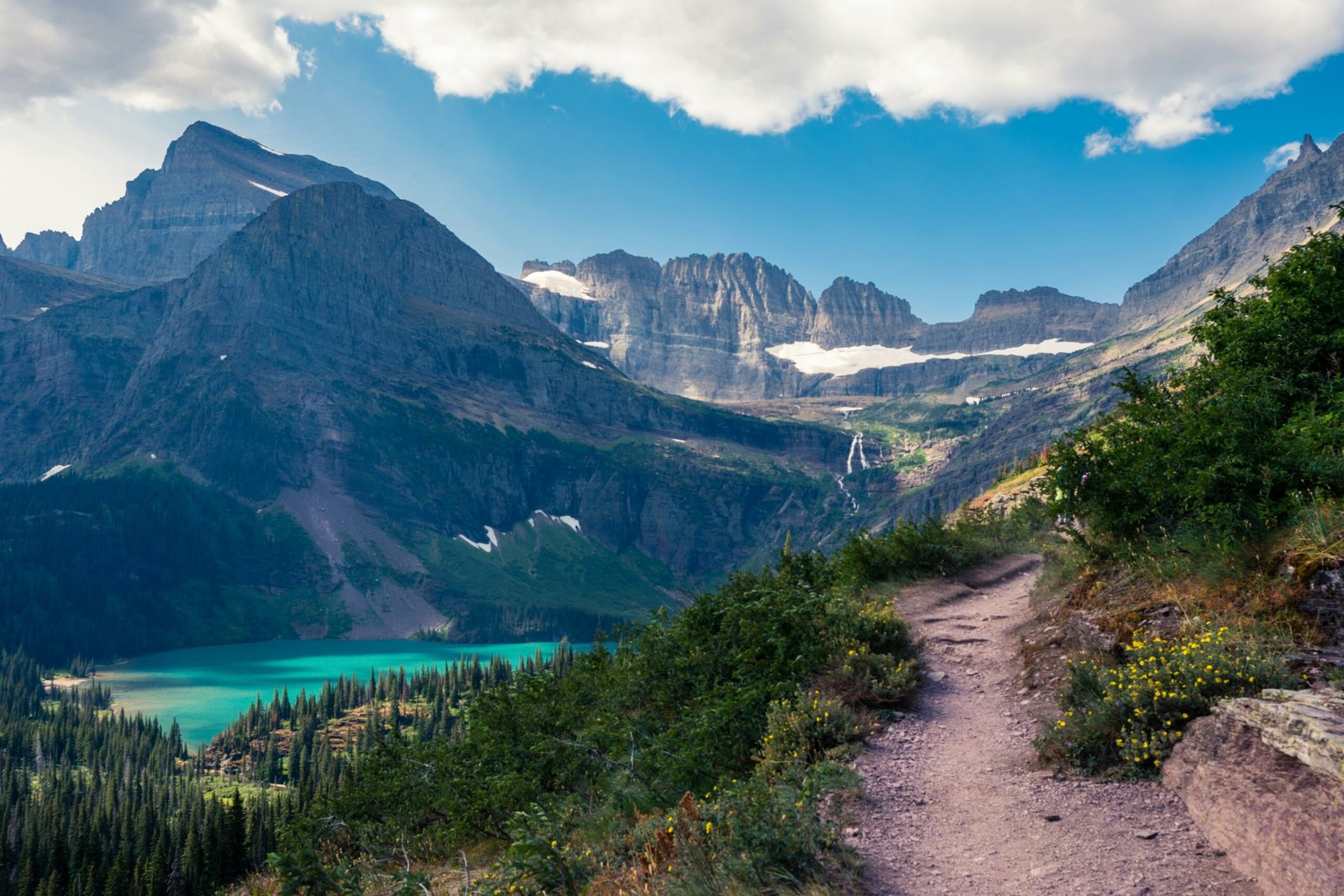
Today i am writing about Going-to-the-Sun Road, the drive that made Glacier National Park famous. This 50-mile engineering marvel crosses the Continental Divide at Logan Pass (6,646 ft), carving through some of the most dramatic alpine scenery in North America. Waterfalls cascade directly onto the road, mountain goats graze on cliffs just feet from your window, and glacially carved valleys stretch into infinity below.
This was completed in 1932 after over a decade of construction, road was built specifically to bring visitors into the heart of the park rather than just its edges. It succeeded spectacularly Going-to-the-Sun Road is now designated both a National Historic Landmark and a National Civil Engineering Landmark, and it draws over two million visitors annually.
Quick facts
50 miles (80 km)
Logan Pass, 6,646 ft
Mid-June to mid-October
Required mid-May through Sept
21 ft length, 8 ft width
$35 per vehicle (7 days)
Vehicle reservations: what you need to know
Since 2022, Glacier National Park requires vehicle reservations to enter the park corridor containing Going-to-the-Sun Road during peak season (typically mid-May through September). Reservations are released in batches through Recreation.gov, typically starting in March for the upcoming summer. They sell out within minutes — set calendar reminders and be ready to book the moment they go live.
If you miss the reservation window, a limited number of same-day reservations are released at 7 PM MT the night before. You can also enter without a reservation before 6 AM (the road opens at sunrise), which is actually the best time to drive — fewer cars, better light, and more wildlife sightings.
The drive: west to east
Starting from the west entrance at Apgar Village, the road follows the shore of Lake McDonald through dense cedar-hemlock forest. The lake’s crystal-clear water reveals colorful pebbles on the bottom — stop at any pullout for photos. At the head of the lake, the road begins climbing in earnest.
The Garden Wall section is the road’s most spectacular stretch — a narrow ledge carved into a 1,000-foot cliff face with waterfalls draping across the road at the Weeping Wall. Pullouts are limited here, so passenger photography is your best bet. The road continues climbing through switchbacks to Logan Pass, where the visitor center sits on the Continental Divide.
East of Logan Pass, the road descends through open alpine terrain past Wild Goose Island Lookout — the single most photographed spot in the park — and along St. Mary Lake before exiting at the east entrance.
Best stops
Lake McDonald: Stop at the pullout near the lodge for the iconic view of colored rocks beneath clear water with snowcapped peaks in the background.
The Loop: A sharp switchback with excellent views of Heavens Peak and access to the Granite Park Chalet trail.
Bird Woman Falls Overlook: A 492-foot waterfall visible from the road — one of the most impressive roadside waterfalls in any national park.
Logan Pass: Park and hike the Hidden Lake Overlook trail (2.7 miles round trip) for panoramic views of the park’s interior and excellent mountain goat sighting opportunities.
Wild Goose Island: A tiny island in St. Mary Lake that’s become the symbol of Glacier National Park. The viewpoint is right off the road.
Vehicle size limit: Vehicles longer than 21 feet or wider than 8 feet (including mirrors) are prohibited on Going-to-the-Sun Road between Avalanche Creek and Rising Sun. This excludes most RVs and large trucks. Free shuttle buses run during peak season as an alternative.
Practical tips
Drive early. Logan Pass parking lot fills by 8–9 AM in summer. Arriving at the west entrance by 6 AM gives you the best experience — empty roads, golden morning light, and active wildlife.
Allow 3–4 hours minimum. The 50 miles can technically be driven in two hours, but with stops, photos, and at least one short hike, a half-day is more realistic.
Bring layers and rain gear. Logan Pass can be 30 degrees cooler than the valley floor. Snow flurries are possible at the summit even in July. Wind at the pass is almost constant and can be fierce.
Watch for wildlife. Mountain goats are common at Logan Pass, bighorn sheep appear along the east side, and bears (both black and grizzly) are present throughout. Maintain 100-yard distance from bears and 25 yards from all other wildlife.
Frequently asked questions
Leave a Reply