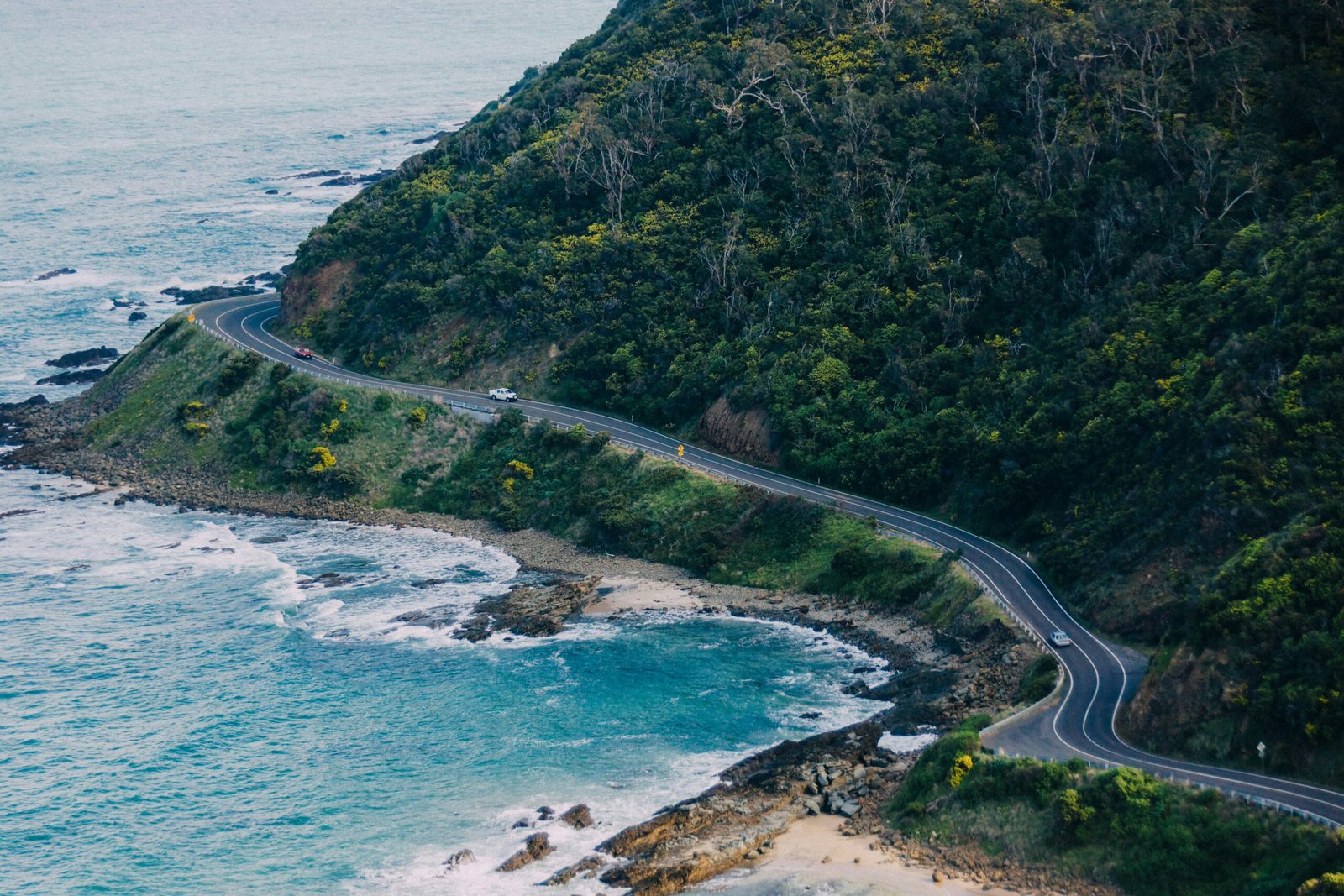
Australia’s Great Ocean Road is one of the world’s most spectacular coastal drives — 243 kilometres of rugged limestone cliffs, ancient rainforest, golden surf beaches, and towering sea stacks carved by the relentless Southern Ocean. Built by returned soldiers after World War I as a memorial to their fallen comrades, it’s both a feat of engineering and one of the most beautiful stretches of road on the planet.
Route overview
The Great Ocean Road runs from Torquay to Allansford along Victoria’s southwestern coast. Most visitors drive from Melbourne, with Torquay sitting just 100 kilometres southwest of the city. The road officially begins at the Memorial Arch near Eastern View and follows the coast through a series of small beach towns before reaching the star attractions — the Twelve Apostles and the surrounding rock formations of Port Campbell National Park.
Quick facts
243 km (151 miles)
Torquay to Allansford
2–4 days
December–March (summer)
AUD $150–$300 per person
East to west (ocean side)
The must-see stops
Bells Beach
One of the world’s most famous surf breaks and home to the annual Rip Curl Pro competition. Even if you don’t surf, the clifftop lookout offers powerful views of the Southern Ocean swell rolling in. The beach featured in the final scene of the film Point Break, though it was actually filmed elsewhere.
Split Point Lighthouse, Aireys Inlet
A picturesque white lighthouse perched on a headland with panoramic coastal views. The surrounding clifftop walk is an excellent short hike and a prime spot for whale watching between June and September when southern right whales and humpbacks migrate along the coast.
Lorne and Apollo Bay
The two main towns along the route. Lorne is a popular holiday town with good restaurants and a beautiful beach backed by the Otway Ranges. Apollo Bay is smaller and quieter — the harbour has excellent fish and chips, and the town serves as the gateway to the Great Otway National Park.
Great Otway National Park
Between Apollo Bay and the Twelve Apostles, the road cuts inland through ancient temperate rainforest. The Otway Fly Treetop Walk is a 600-metre elevated walkway through the forest canopy, 25 metres above the ground. Triplet Falls and Hopetoun Falls are both accessible from short walking trails. At night, glow worms are visible at Melba Gully — bring a torch with a red filter.
Twelve Apostles
The main event. These towering limestone stacks — originally nine, now eight after one collapsed in 2005 — rise from the Southern Ocean just off the coast. They were carved over millions of years by wave erosion and stand up to 45 metres tall. Sunset is the prime viewing time when the stacks glow orange and gold. A helicopter flight offers a completely different perspective and is worth the splurge. The visitor centre and car park are free.
Loch Ard Gorge
Named after a shipwreck that killed 52 people in 1878, with only two survivors — both teenagers — who washed into this sheltered gorge. The story is haunting, and the gorge itself is stunning: sheer cliffs enclosing a small beach with turquoise water. Several walking trails connect viewpoints along the cliff tops. The nearby Island Archway and The Razorback are additional formations worth visiting.
London Arch
Formerly London Bridge, this double-arched formation lost its connection to the mainland in 1990 when the inner arch collapsed — stranding two tourists on the outer section who had to be rescued by helicopter. The remaining arch is still impressive, and the story makes it one of the most talked-about stops on the route.
Itinerary options
Day trip from Melbourne
Possible but rushed. You’ll see the Twelve Apostles and a couple of stops but miss the rainforest and smaller towns. Leave Melbourne by 7 AM and expect to return after dark. Better than nothing, but not the ideal experience.
2-day trip (recommended minimum)
Day 1: Melbourne to Apollo Bay via Bells Beach, Lorne, and the coastal stretch. Stay overnight in Apollo Bay. Day 2: Apollo Bay to the Twelve Apostles via the Otways, then return to Melbourne via the inland highway. This pace allows real stops without constant rushing.
3-4 day trip (the proper way)
Add time for the Otway rainforest walks, a helicopter flight over the Apostles, whale watching in season, and the charming towns of Port Fairy and Warrnambool at the western end. Stay in Apollo Bay and Port Campbell.
Budget breakdown (per person per day in AUD)
| Expense | Budget | Mid-Range |
|---|---|---|
| Car rental share | $25–$40 | $40–$60 |
| Fuel | $15–$25 | $15–$25 |
| Accommodation | $30–$60 (hostel/caravan) | $80–$160 (hotel/B&B) |
| Food | $30–$50 | $60–$100 |
| Activities | $0–$20 | $30–$80 |
| Daily total | $100–$195 | $225–$425 |
Important: Drive east to west (Torquay toward the Twelve Apostles). This keeps you on the ocean side of the road — the left lane hugs the cliffs, giving you and your passengers unobstructed coastal views. Driving west to east puts you on the inland side with oncoming traffic between you and the ocean.
Practical tips
Watch for wildlife. Koalas are commonly spotted in eucalyptus trees along the Otway section — look up into the canopy at Kennett River, where a wild koala colony lives right beside the road. Kangaroos and wallabies are active at dawn and dusk and can jump into the road without warning. Drive cautiously during these hours.
The weather is unpredictable. Victoria’s coast can experience four seasons in one day. Pack layers even in summer — coastal winds can make 25°C feel much cooler. Rain is possible any month. Winter (June–August) brings rougher seas and more dramatic skies, but also fewer tourists.
Book accommodation in advance. Apollo Bay and Port Campbell have limited hotel options that fill up quickly during Australian summer holidays (December–January) and Easter. Camping and caravan parks offer budget-friendly alternatives and are plentiful along the route.
Frequently asked questions
Leave a Reply