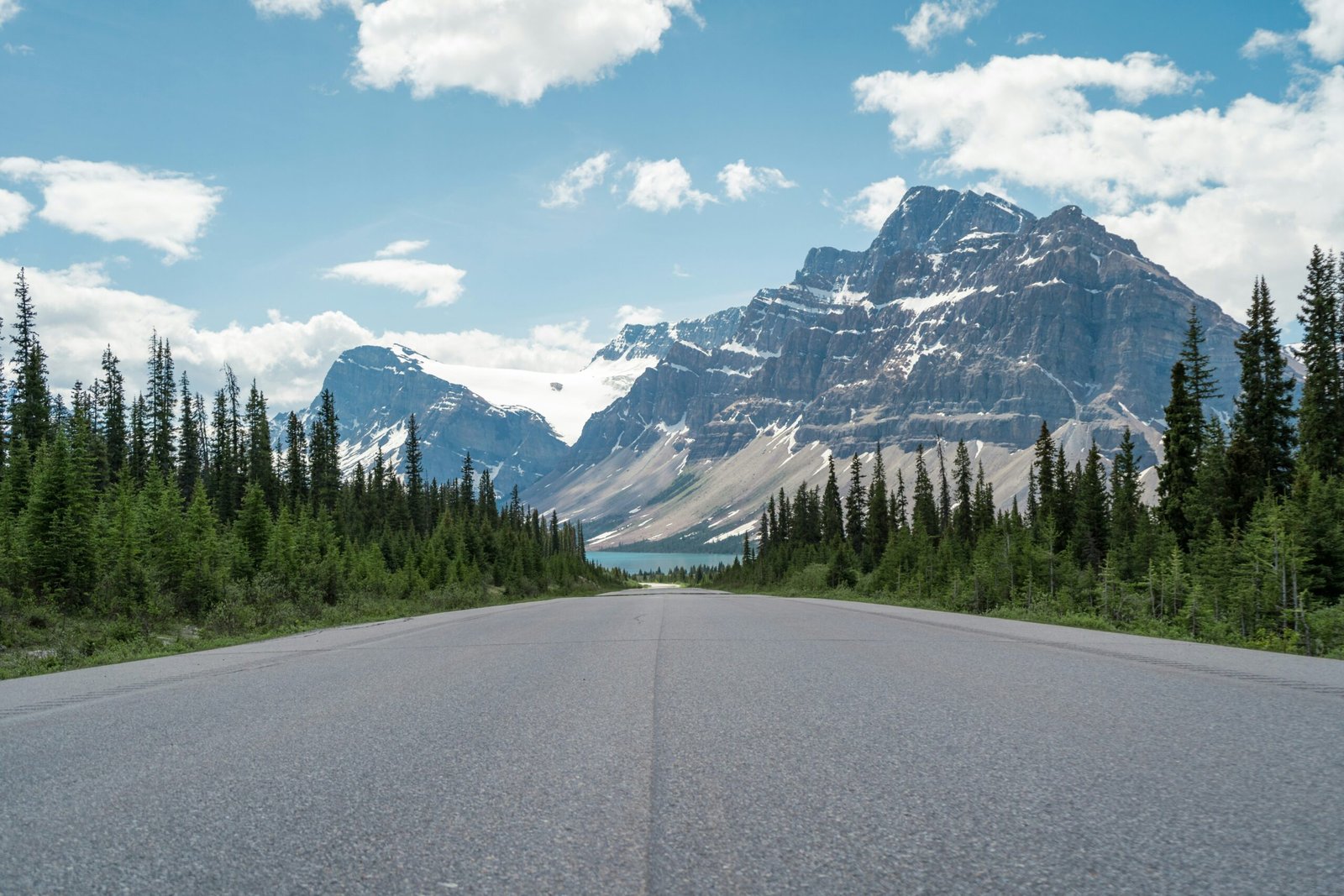
The Icefields Parkway is routinely called the most beautiful highway in the world — and after driving its 232 kilometres through the Canadian Rockies, it’s hard to argue. Connecting Lake Louise to Jasper through Banff and Jasper National Parks, the road passes more than 100 glaciers, dozens of waterfalls, turquoise lakes that look digitally enhanced, and some of the most pristine mountain wilderness left in North America.
Quick facts
232 km (144 miles)
Lake Louise to Jasper
3–4 hours nonstop
CAD $10.50/day or $72.25/year
June–September
Saskatchewan Crossing only
Why this road is unmatched
Most scenic drives offer views of mountains from a distance. The Icefields Parkway puts you inside the mountains — driving through glacial valleys with 10,000-foot peaks rising directly on both sides. The Columbia Icefield, the largest icefield in the Rocky Mountains, is visible from the road and accessible via a guided tour onto Athabasca Glacier. The water in Peyto Lake is so intensely turquoise that first-time visitors genuinely think their eyes are playing tricks.
Must-see stops (south to north)
Bow Lake
One of the first lakes you’ll encounter driving north from Lake Louise. The turquoise water reflects Crowfoot Glacier and the surrounding peaks. The historic Num-Ti-Jah Lodge on the shore has a restaurant with one of the best views of any dining room in Canada. An easy lakeshore walk takes you to the glacier-fed stream that feeds the lake.
Peyto Lake Viewpoint
The most photographed spot on the Parkway. A short uphill walk from the parking area leads to a viewing platform overlooking the fox-head-shaped lake, which glows an almost unreal shade of turquoise from glacial rock flour suspended in the water. Come early — the parking lot fills by mid-morning in summer. The morning light is best for photography, with the sun illuminating the lake from behind the viewpoint.
Saskatchewan River Crossing
The only services on the entire Parkway — fuel, food, and basic supplies. Fill your tank here regardless of how much fuel you have. The next gas station is 150 kilometres in either direction. The location isn’t scenic by Parkway standards, but the surrounding valleys are still stunning compared to anywhere else.
Columbia Icefield and Athabasca Glacier
The Columbia Icefield covers 325 square kilometres and feeds rivers that flow to three oceans — the Atlantic, Pacific, and Arctic. The Athabasca Glacier is the most accessible glacier in North America, and you can walk to its toe from the parking area (free) or take a guided Ice Explorer bus tour onto the glacier itself (approximately CAD $95). The glacier has retreated dramatically over the past century — markers along the access road show its former positions.
Sunwapta Falls
A powerful waterfall where the Sunwapta River plunges through a narrow limestone canyon. The upper falls are accessible from a short paved trail and are excellent for photography. The lower falls require a longer hike but are less crowded and equally impressive.
Athabasca Falls
Near the northern end of the Parkway, Athabasca Falls is the most powerful waterfall on the route. The Athabasca River forces through a narrow gorge with tremendous force, creating a constant mist. Several viewpoints and bridges provide different perspectives. The carved potholes in the canyon walls show the river’s power over thousands of years.
Wildlife
The Icefields Parkway is one of the best wildlife corridors in the Canadian Rockies. Mountain goats are commonly spotted on rocky slopes near the road, especially in the Sunwapta Pass area. Bighorn sheep often graze on roadside vegetation and may approach your vehicle. Black bears and grizzly bears are present throughout — keep your distance (100 metres minimum) and never feed wildlife. Elk are abundant near Jasper. Caribou, once common on the Parkway, are now critically endangered — a sighting is rare and special.
Fuel warning: There is only ONE gas station on the entire 232 km Parkway — at Saskatchewan River Crossing. Fill up before entering the highway from either end, and top up at the Crossing regardless. Running out of fuel on this road means a very expensive tow through a national park with no cell service.
Practical tips
Buy a Parks Canada pass before you arrive. You need a valid national park pass to drive the Parkway. A day pass costs CAD $10.50 per person or the Discovery Pass at $72.25 gives unlimited access to all Canadian national parks for a year. Purchase online or at park gates.
Drive south to north. Starting from Lake Louise toward Jasper keeps the most dramatic scenery ahead of you and the afternoon sun behind you. The Columbia Icefield appears dramatically around a corner rather than slowly approaching from the distance.
Allow a full day minimum. The 232 km drive takes 3 hours without stopping, but with viewpoints, short hikes, and photo stops, plan for 6–8 hours. Many travellers make it a two-day drive with an overnight in a campground along the route.
Cell service is essentially nonexistent. Download offline maps and let someone know your itinerary before driving. Emergency roadside phones are available at a few locations along the highway.
Frequently asked questions
Leave a Reply