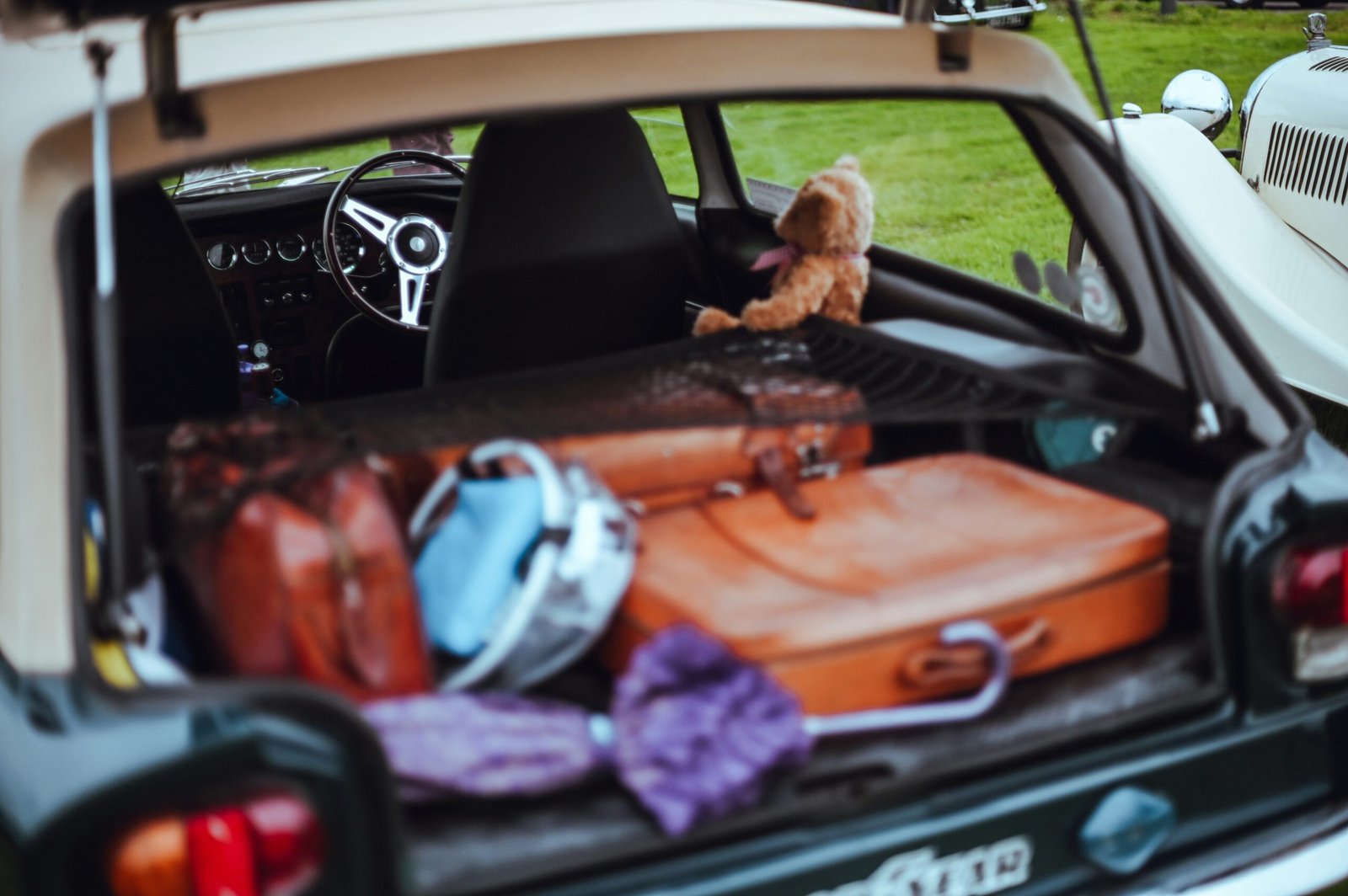
Ahh, and the difference between a road trip that flows and one that frustrates often comes down to packing. Bring too little and you’re making emergency purchases at inflated gas station prices. Bring too much and your car feels cramped by day two. This list represents everything we actually bring on multi-day road trips tested, refined, and stripped to the essentials.
Car essentials
Jumper cables or a portable jump starter. A dead battery at a remote trailhead with no other cars around is a trip-ender without one. Portable jump starters ($40–$70) are lighter than cables and don’t require another vehicle.
Tire pressure gauge and portable air compressor. Low tire pressure burns extra fuel and increases blowout risk on hot highways. A $30 12V compressor that plugs into your cigarette lighter takes two minutes to top off a low tire.
Basic tool kit. A wrench set, screwdrivers, pliers, zip ties, duct tape, and a flashlight handle 90% of minor roadside issues. Pack them in a small bag under a seat — they add almost no weight but save enormous headaches.
Two gallons of water beyond drinking supply. For radiator emergencies, washing hands and dishes, and general backup. In desert regions, carry more.
Paper road atlas or offline maps. Cell service fails in exactly the places where you most need navigation — remote mountain passes, desert crossings, and canyon country. Download offline maps through Google Maps or Maps.me before you leave cell coverage.
Comfort and sleeping
Sleeping bag rated 20 degrees below your expected low. Mountain elevations can drop to near freezing even in summer. A bag rated to 20°F handles most three-season road trips comfortably.
Sleeping pad. Even if you’re sleeping in your car, a foam pad makes a folded-down back seat dramatically more comfortable. For tent camping, it’s the difference between sleep and misery.
Pillow. A compressible camp pillow ($15) packs small but improves sleep quality enormously. Don’t use a rolled-up jacket — you’ll regret it by night three.
Layers, not bulk. Pack light, versatile layers rather than heavy single-purpose items. A moisture-wicking base layer, a fleece mid-layer, a rain shell, and a down jacket handle temperatures from 30°F to 90°F.
Kitchen and food
Cooler. Even a basic $20 cooler keeps drinks cold and perishable food safe. Freeze water bottles as ice packs — they double as cold drinking water as they melt.
Camp stove or single-burner. A basic butane stove ($25) with a couple of canisters lets you cook hot meals at camp and make morning coffee. The JetBoil system is more expensive but boils water in two minutes — perfect for instant oatmeal and ramen.
One pot, one pan, two utensils per person. That’s all you need. A nesting pot and pan set saves space. Don’t pack your entire kitchen — you’ll use a fraction of it.
Reusable water bottles. At least one per person, preferably insulated to keep water cold in hot climates.
Tech and entertainment
Phone mount. A sturdy dashboard or vent-clip mount keeps your phone visible for navigation without holding it. Essential for safety and in many states a legal requirement.
USB car charger with at least 2 ports. Your phone, dash cam, and portable speaker all need charging. A multi-port fast charger keeps everything topped up.
Portable battery pack (10,000+ mAh). For hiking days, camping without car access, and emergencies when you need phone power away from the car.
Dash cam. Records scenic drives, provides insurance evidence, and captures unexpected moments. See our full dash cam guide for our recommendations.
Safety and documents
First aid kit. Don’t rely on a gas station band-aid selection. A basic car first aid kit ($15–$25) covers cuts, burns, sprains, headaches, and allergic reactions.
Roadside emergency kit. Reflective triangles or flares, a reflective vest, and a basic tow strap. You may never need them, but if you do, you’ll be very glad you packed them.
Copies of insurance, registration, and ID. Keep digital copies in your phone and paper copies in the glovebox. If your phone dies and you need your insurance information during an incident, paper saves you.
What NOT to pack
More than three pairs of shoes. A full-size towel (use a quick-dry camp towel). Multiple guidebooks (use your phone). A separate camera bag if your phone camera is good enough. More clothes than one outfit per two days plus layers. An oversized tent for a solo or couple trip. Anything “just in case” that you’ve never actually used on a previous trip.
The goal is a car where you can still see out the back window, reach everything without unpacking, and feel comfortable driving for hours. If your trunk is crammed to the ceiling, you’ve overpacked.
Frequently asked questions

Leave a Reply