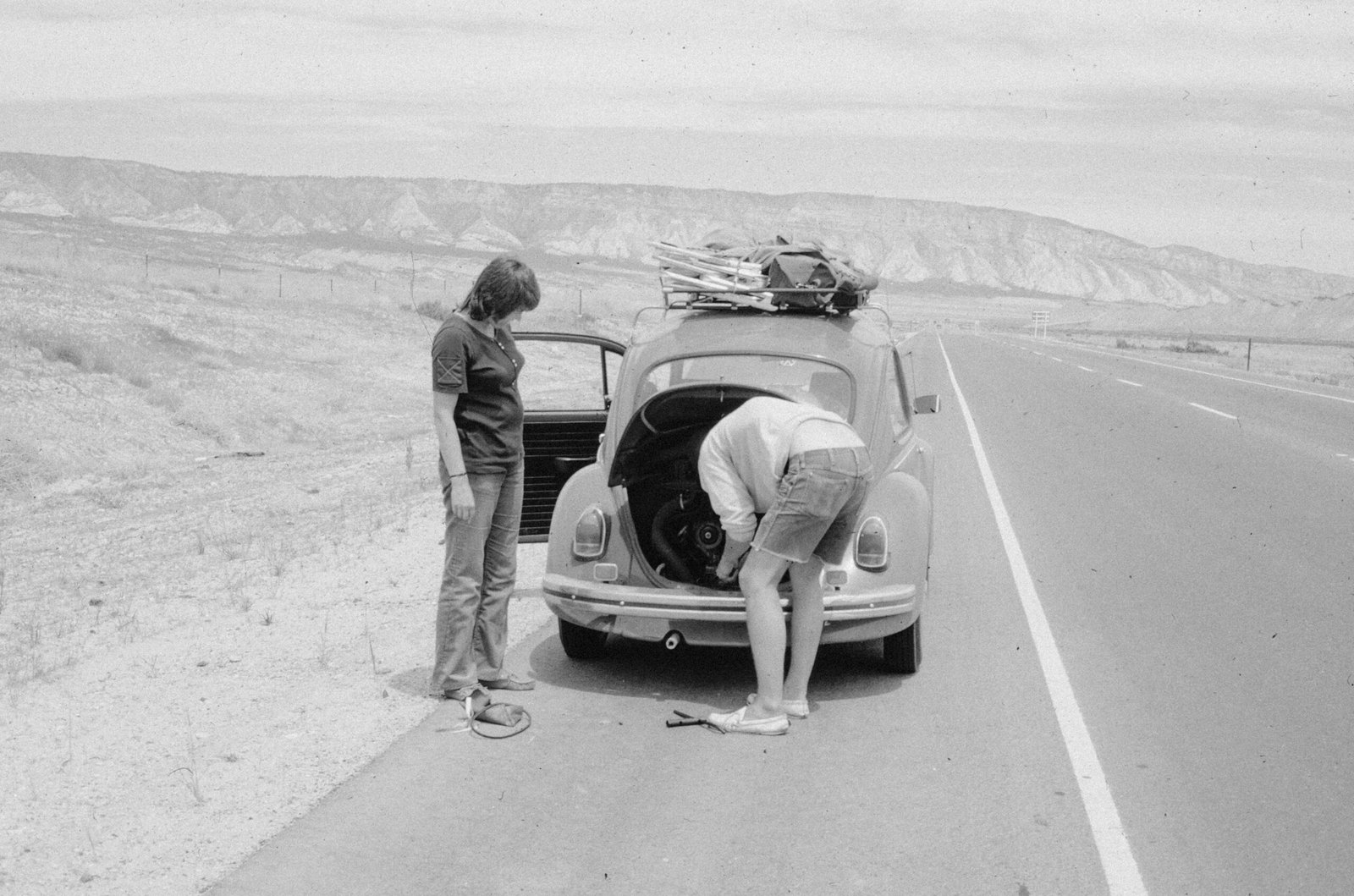
The difference between a great road trip and a stressful one usually comes down to preparation. Pack too little and you’ll spend half the trip hunting for supplies in unfamiliar towns. Pack too much and your car becomes an overstuffed closet on wheels. This checklist hits the sweet spot — everything you actually need, nothing you don’t.
Vehicle preparation
Before packing a single bag, make sure your vehicle is ready for the journey. A breakdown on a remote highway is the fastest way to ruin a road trip.
Fluids and filters: Check and top up engine oil, coolant, brake fluid, power steering fluid, and windshield washer fluid. Replace your engine air filter if it’s been more than 15,000 miles. Old oil and low coolant are the top two causes of preventable breakdowns on long drives.
Tires: Check all four tires plus the spare for proper pressure and tread depth. The penny test works — insert a penny headfirst into the tread. If you can see all of Lincoln’s head, the tread is too worn. Ensure you have a working jack and lug wrench. Many modern cars come without a spare tire — verify yours has one, and if not, carry a tire repair kit and portable inflator.
Battery: If your battery is older than three years, have it tested at any auto parts store (usually free). Extreme temperatures and long drives put extra stress on aging batteries.
Lights and wipers: Test all exterior lights including turn signals, brake lights, and reverse lights. Replace worn wiper blades — you’ll be grateful during the first unexpected rainstorm on an unfamiliar mountain road.
Safety and emergency gear
These items take up minimal space but could save your life in an emergency. Most experienced road trippers consider these non-negotiable.
First aid kit: A comprehensive kit should include adhesive bandages in multiple sizes, antiseptic wipes, gauze rolls and pads, medical tape, pain relievers (ibuprofen and acetaminophen), antihistamines, tweezers, scissors, and any personal medications you take regularly. For remote desert or mountain trips, add altitude sickness medication, sunburn treatment, and an emergency whistle.
Emergency car kit: Jumper cables (or a portable jump starter, which is better), a reflective warning triangle or road flares, a flashlight with extra batteries, a basic tool kit (screwdrivers, pliers, adjustable wrench), duct tape, zip ties, and a tow strap. A portable jump starter that also charges phones is one of the best dual-purpose items you can carry.
Water: Carry at least one gallon per person for emergencies, stored separately from your drinking water. In desert regions, increase this to two gallons per person. A LifeStraw or water purification tablets weigh almost nothing and provide backup filtration if you need to use natural water sources.
Paper maps: GPS fails. Phone batteries die. Cell service disappears. A paper atlas of your driving region is cheap insurance against getting lost in areas without digital coverage. The Rand McNally Road Atlas is the standard and costs under $15.
Pro tip: Create a “breakdown bag” — a small drawstring bag kept within arm’s reach containing your phone charger, flashlight, reflective vest, and the number for your roadside assistance provider. When something goes wrong at 11 PM on a dark highway, you don’t want to be digging through the trunk.
Technology and navigation
Phone mount: A secure dashboard or vent mount keeps your phone visible for navigation without handling it while driving. Magnetic mounts are the fastest to use. Avoid suction cup mounts in hot climates — they fall off when the adhesive softens.
Charging setup: A dual USB car charger is essential. For longer trips, a portable power bank (20,000mAh minimum) keeps devices charged during hikes and overnight camping. If you’re running a cooler, camera, or laptop, a portable power station like the ones we reviewed is worth the investment.
Dash cam: Records the entire trip — both for safety documentation and for capturing scenic moments you can review later. Our top picks start at $70 and mount in minutes.
Offline maps: Download Google Maps offline for every region you’ll be driving through while you still have WiFi. Include a buffer zone around your route in case detours are needed.
Comfort and convenience
Sunglasses: Polarized sunglasses reduce glare from wet roads and oncoming headlights. They’re arguably the most important comfort item for long-distance driving. Keep a backup pair in the glove box.
Neck pillow and blanket: Essential for passengers, especially on multi-day trips. A compact travel blanket doubles as a picnic blanket at scenic overlooks.
Cooler: A quality cooler keeps drinks and snacks cold without gas station stops. A 45-quart hard cooler holds enough for two people for three days. Pre-chill it overnight before departure. Use block ice rather than cubed — it lasts three times longer.
Reusable water bottles: One insulated bottle per person. Fill up at gas stations and rest stops to save money and reduce waste. Insulated bottles keep water cold for 24 hours even in a hot car.
Clothing strategy
Pack for layers, not for outfits. Mountain weather changes rapidly, and a single road trip can take you through multiple climate zones in one day.
Base layers: Moisture-wicking T-shirts and underwear. Merino wool is the gold standard — it regulates temperature, resists odour, and dries quickly. Three sets are sufficient for a week-long trip if you wash one set while wearing another.
Mid layers: A fleece jacket or down vest for cool mornings and high-altitude stops. Packable down compresses to almost nothing and provides exceptional warmth for its weight.
Outer layer: A waterproof shell jacket that packs small. You’ll need it for unexpected rain, waterfall mist, and windy overlooks. Don’t leave this at home even if the forecast looks clear.
Footwear: Comfortable driving shoes plus one pair of hiking boots or trail runners if you plan any walks. Break in new boots before the trip — blisters are miserable on the road.
Food and kitchen
Non-perishable snacks: Trail mix, beef jerky, granola bars, dried fruit, crackers, and peanut butter. These bridge the gaps between meals and save money versus gas station markup. Budget roughly $30-50 in pre-trip snack shopping to save $100+ on the road.
Portable cooking: A single-burner camp stove, a small pot, utensils, and a lighter open up meal options dramatically. Morning coffee and simple dinners at camp save significant money compared to restaurants. A JetBoil-style integrated stove boils water in under two minutes and packs smaller than a water bottle.
Cleanup supplies: Paper towels, biodegradable dish soap, a sponge, and trash bags. A roll of heavy-duty aluminium foil works as a plate, cooking surface, and food wrap.
Camping additions
If your road trip includes camping — and the best ones usually do — add these items to your base checklist.
Shelter: A tent appropriate for your group size, or a rooftop tent or sleeping platform if your vehicle supports it. Practice setting up your tent at home before the trip.
Sleep system: Sleeping bag rated 10-15 degrees below the coldest temperature you expect, plus a sleeping pad for insulation from the ground. An inflatable pad provides better comfort and insulation than a foam pad.
Lighting: A headlamp for hands-free use around camp, plus a lantern for ambient light. Rechargeable options powered from your car or power bank eliminate the need for spare batteries.
Documents and money
Physical copies: Driver’s licence, vehicle registration, proof of insurance, and any park passes or reservations printed on paper. Phone screenshots are fine as backup but not always accepted as primary proof.
Cash: Carry $100-200 in small bills. Many rural gas stations, campgrounds, and roadside attractions don’t accept cards. Cash also serves as emergency backup if your card is compromised during the trip.
Frequently asked questions

Leave a Reply