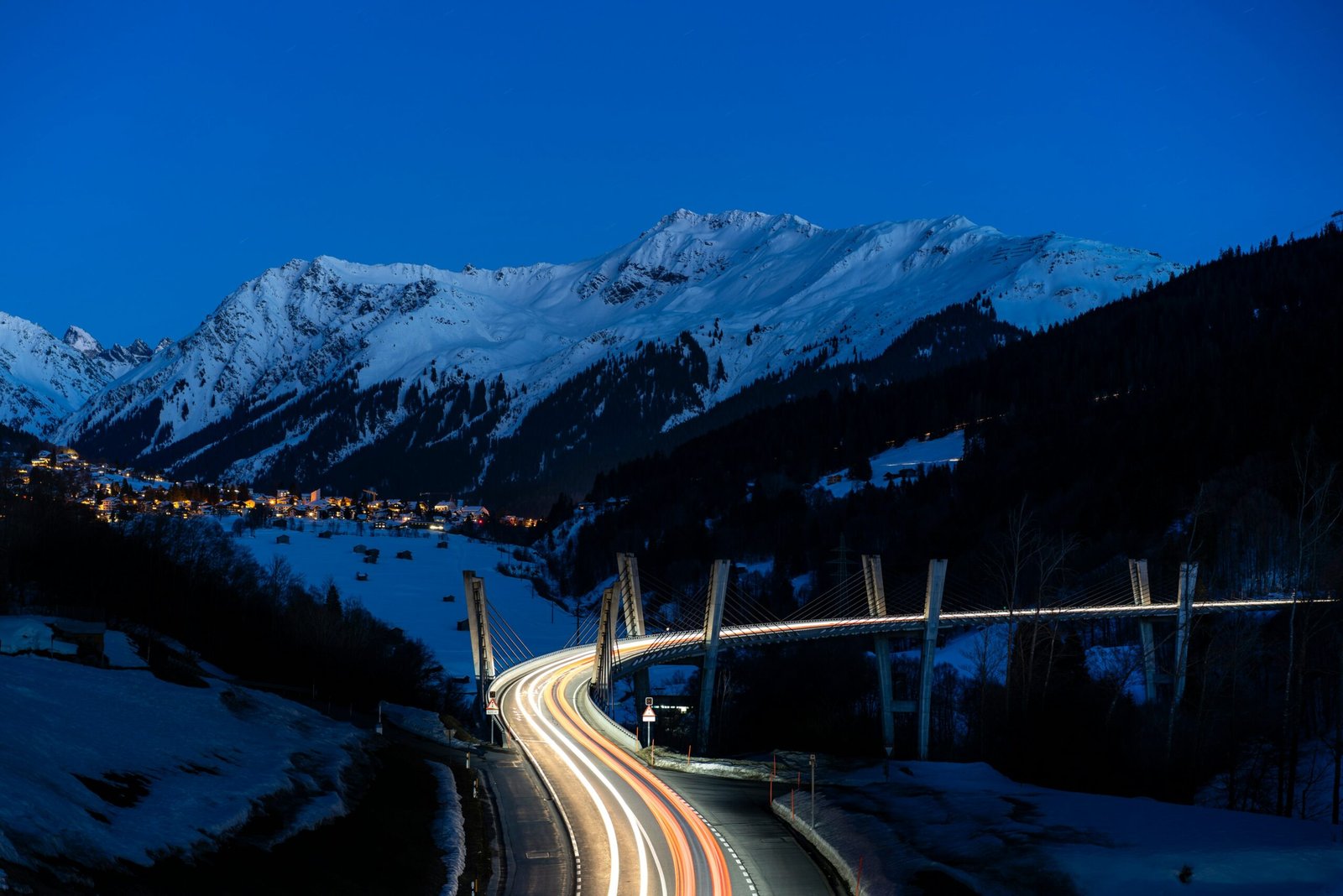
Switzerland is a country engineered for scenic driving. The Swiss have spent centuries building roads through landscapes so vertical that the engineering alone is worth the trip. Add turquoise glacier lakes, meadows carpeted with wildflowers, and mountain passes where you drive above the clouds, and you have the finest alpine driving in the world.
1. Furka Pass
Distance: 24 miles | Highest point: 7,976 ft | Season: June–October
Made famous by the James Bond car chase in “Goldfinger,” the Furka Pass is a masterclass in alpine road engineering. The eastern ascent from Andermatt features tight switchbacks carved into bare rock above the treeline. At the summit, the Rhône Glacier is visible — though it’s retreated dramatically in recent decades. The western descent toward Gletsch drops through a series of hairpin turns with views of the Bernese Alps. The Glacier Express railway runs through a tunnel beneath the pass — you can drive over while the train passes under.
2. Susten Pass
Distance: 28 miles | Highest point: 7,415 ft | Season: June–October
Many Swiss locals consider Susten the most beautiful pass in the country. The western approach from Innertkirchen climbs through a valley so green it looks artificial, past waterfalls streaming down vertical rock walls. The summit area has a stunning view of the Steingletscher glacier, reflected in a small turquoise lake. The road was built in the 1940s specifically as a scenic route — unlike most Swiss passes which serve as transport corridors. This means the road was designed with viewpoints and sweeping curves rather than pure efficiency.
3. Grimsel Pass
Distance: 22 miles | Highest point: 7,100 ft | Season: June–October
A stark, dramatic landscape of bare granite and reservoir lakes. Grimsel feels almost Scandinavian — windswept rock, dark water, and minimal vegetation. The road follows a series of hydroelectric reservoirs, including Grimselsee with its striking turquoise colour from glacial minerals. The Grimsel Hospice, a historic mountain inn at the summit, has been welcoming travellers since the 14th century. Combine with Susten and Furka for the classic “Three Passes” day trip — one of the finest driving loops in Europe.
4. Grand St. Bernard Pass
Distance: 20 miles (Swiss side) | Highest point: 8,100 ft | Season: June–October
The oldest pass route through the western Alps — used since the Bronze Age and famously crossed by Napoleon’s army in 1800. The hospice at the summit has been run by Augustinian monks since the 11th century and is the birthplace of the St. Bernard rescue dog breed. The pass straddles the Swiss-Italian border, and you can park at the summit lake, have lunch in Italy, and drive back to Switzerland in 20 minutes. The approach from Martigny through the Entremont Valley passes vineyards and medieval villages.
5. Klausen Pass
Distance: 29 miles | Highest point: 6,404 ft | Season: June–October
Less famous than its neighbours but equally rewarding. The Klausen connects Altdorf in Uri canton to Linthal in Glarus, crossing through pastoral alpine meadows with views of the Clariden glacier. The road is narrower and less trafficked than the major passes, giving it a more intimate, old-world character. The Urnerboden, a vast alpine meadow on the south side, is Switzerland’s largest alp and is carpeted with wildflowers in June. Cows wearing bells graze beside the road — this is the Switzerland of postcards.
6. Swiss Grand Tour Route (Selected highlights)
Distance: 1,000 miles (full loop) | Season: Year-round (some passes seasonal)
Switzerland’s official scenic driving route loops through the entire country, passing 12 UNESCO World Heritage Sites, five alpine passes, 22 lakes, and two biospheres. The full route takes at least a week, but the most spectacular sections can be driven individually. The stretch from Interlaken to Lucerne via Brünig Pass combines lakeside driving with mountain scenery. The Lac Léman (Lake Geneva) section from Montreux to Lausanne has vineyard terraces overlooking the lake with the French Alps as backdrop. The route is well-signposted with a distinctive “Grand Tour” logo.
7. Julier Pass
Distance: 22 miles | Highest point: 7,493 ft | Season: Year-round
One of the few Swiss alpine passes open year-round, thanks to its relatively gradual gradient and efficient snow clearing. The road from Tiefencastel to Silvaplana in the Engadin valley passes through a desolate, treeless landscape at the summit that feels almost lunar. The descent into the Upper Engadin reveals the famous chain of lakes around St. Moritz — Silvaplana, Champfèr, and St. Moritz. In winter, the frozen lakes and snow-covered mountains are stunningly beautiful and far less crowded than summer.
8. Axenstrasse — Lake Lucerne
Distance: 12 miles | Season: Year-round
A short but dramatic lakeside drive along the eastern shore of Lake Lucerne (Vierwaldstättersee). The road is carved into sheer cliff faces hundreds of feet above the lake, with tunnels cutting through rock promontories. The viewpoints at Rütli Meadow look across to the site where Switzerland was founded in 1291. The historic Axenstrasse (old road) is partially closed to cars but open to cyclists and walkers, offering an even more dramatic cliff-edge experience. William Tell legend places his apple-shooting feat at Altdorf, at the southern end of this drive.
Swiss driving essentials: You need a CHF 40 (approximately $45) annual vignette sticker for motorway use — buy it at the border, gas stations, or post offices. Mountain passes are free. Headlights must be on at all times. Speed limits are strictly enforced by radar cameras: 50 km/h in towns, 80 km/h on main roads, 120 km/h on motorways. Fines are severe — exceeding the limit by 25 km/h can result in a CHF 800+ fine. Fuel costs roughly CHF 1.80-2.00 per litre.
Frequently asked questions
Leave a Reply